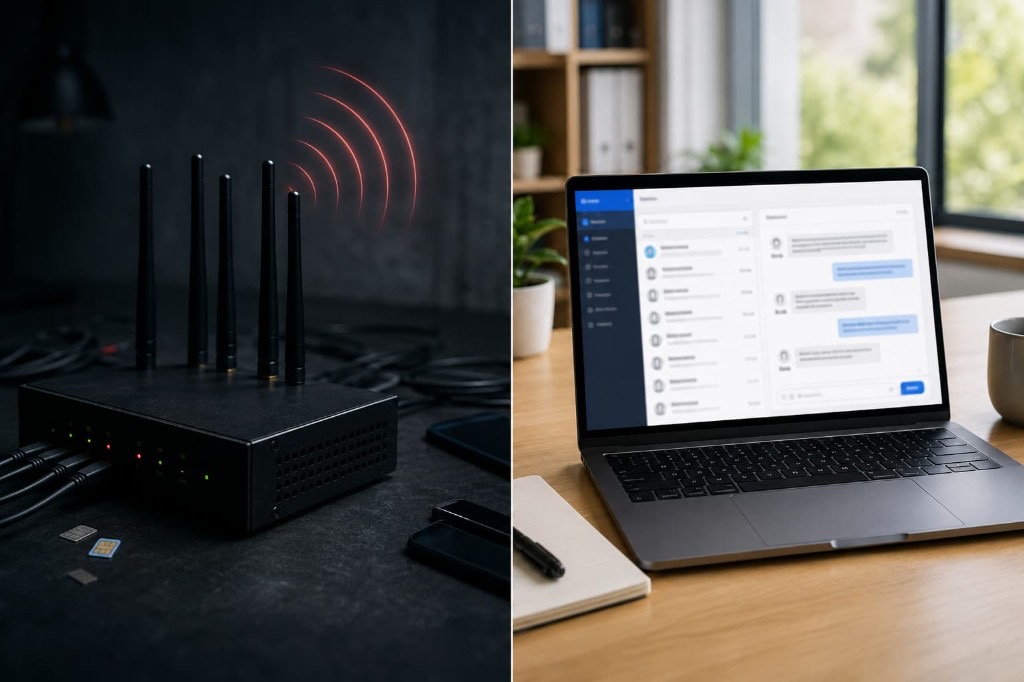
TL;DR: “SMS blaster” refers to two completely different things. One is an illegal hardware device that hijacks nearby phones to push scam texts, banned in nearly every country. The other is legitimate bulk SMS software that businesses use to text opted-in customers, which is legal with proper consent and A2P 10DLC registration. If you’re a business asking whether SMS blasting is legal, the answer is yes when you do it right.
If you’ve searched whether SMS blasters are legal, you may have run into confusing and even alarming results. That’s because the term covers two entirely different things that happen to share a name. One is a crime. The other is a normal business tool. Sorting out which is which clears up most of the confusion.
The Two Meanings of “SMS Blaster”
The phrase “SMS blaster” gets applied to both a criminal device and a category of marketing software. They have almost nothing in common except the word “blaster.”
Understanding the difference matters, because the legal answer flips completely depending on which one you mean. So before anything else, here’s the distinction.
Meaning One: The Illegal Device
In the last couple of years, “SMS blaster” has shown up in news coverage referring to a piece of illegal hardware. This device imitates a legitimate mobile network tower. Phones nearby are tricked into connecting to it, and once connected, the device pushes text messages straight to them, bypassing the carrier network entirely.
Because it doesn’t go through carriers, it ignores everything that normally governs messaging. There’s no opt-in. The operator doesn’t even need the recipients’ phone numbers. It simply blasts messages to every phone within range. These devices have been used for large-scale fraud and phishing, pushing fake bank alerts and scam links to thousands of people in a area.
This kind of SMS blaster is illegal in virtually every country. Operating one typically violates telecommunications law, fraud statutes, and unauthorized-network regulations all at once. Law enforcement agencies internationally have made arrests tied to these devices, and the penalties are serious.
If that’s the SMS blaster you were reading about, the answer is simple: it’s illegal, full stop. It’s criminal equipment, not a business tool.
Meaning Two: The Legitimate Software
The far more common meaning, and almost certainly the one you’ll deal with as a business, is bulk SMS software. This is the legitimate category: apps and platforms that send text messages at scale through the normal carrier network to a list of contacts you already have.
This kind of SMS blaster is legal. It works entirely within the carrier system. It respects opt-ins and opt-outs. It requires registration. It’s the same infrastructure behind the appointment reminders from your dentist and the shipping updates from online stores.
The legality of this kind isn’t about the software. It’s about how you use it. Which brings us to the real question most businesses are actually asking.
When Is the Software Kind Legal?
Using bulk SMS software is legal when you follow the rules that govern commercial messaging. The main ones:
Consent. You can only text people who opted in to hear from you. In the US, the TCPA requires prior express consent for marketing messages. Texting people who never agreed to it is where businesses cross from legal into illegal, regardless of what software they used.
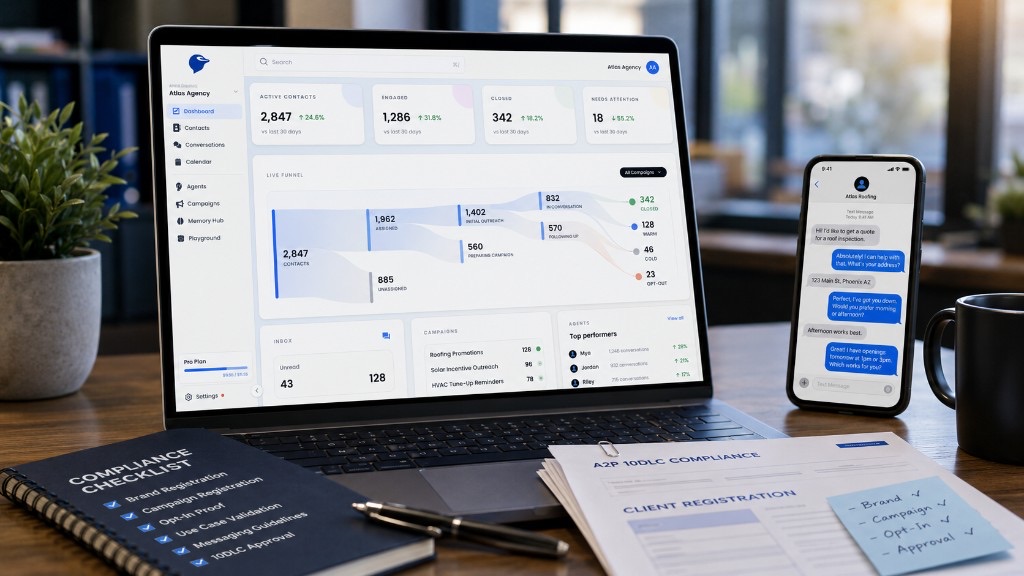
A2P 10DLC registration. Sending business messaging at scale in the US requires registering your business and campaigns through the A2P 10DLC system. This is how carriers verify legitimate traffic. It’s a legal and practical requirement, not optional.
Opt-out handling. Every recipient must be able to unsubscribe, usually by replying STOP, and you have to honor it. The software should handle this automatically.
Content rules. Certain categories, like some financial, cannabis, or high-risk content, face additional restrictions or outright prohibition.
Get those right and bulk SMS is fully legal. Get them wrong, and you’re exposed to TCPA penalties and carrier blocking, even though the software itself was perfectly legitimate. We go deeper on the campaign-level rules and what the fines look like in our guide on whether SMS blasting is illegal.
How to Tell Which One You’re Dealing With
If you’re evaluating a tool and want to be sure it’s the legitimate kind, the test is straightforward.
The software kind is an app or web platform. It sends through carriers. It asks you to import your own contact list. It walks you through compliance registration. It handles opt-outs. Everything it does assumes you have permission to message the people on your list.
The illegal device kind is physical hardware. It doesn’t ask for phone numbers because it broadcasts to whatever phones are nearby. It doesn’t mention consent or registration because it bypasses the entire system those things live in. No legitimate business platform works this way.
In practice, every SMS tool you’ll find as a business through an app store, a website, or a software search is the legal software kind. The illegal devices aren’t sold openly as business tools. They’re contraband.
What This Means for Your Business
If you’re a service business wondering whether you can legally text your customers and leads, the answer is yes. Use legitimate bulk SMS or conversational messaging software, get proper consent, complete your A2P 10DLC registration, and handle opt-outs. That’s standard, legal, everyday business communication.
The confusion only exists because a criminal device borrowed the same name. Once you separate the two, there’s nothing legally murky about texting your opted-in customers through proper software.
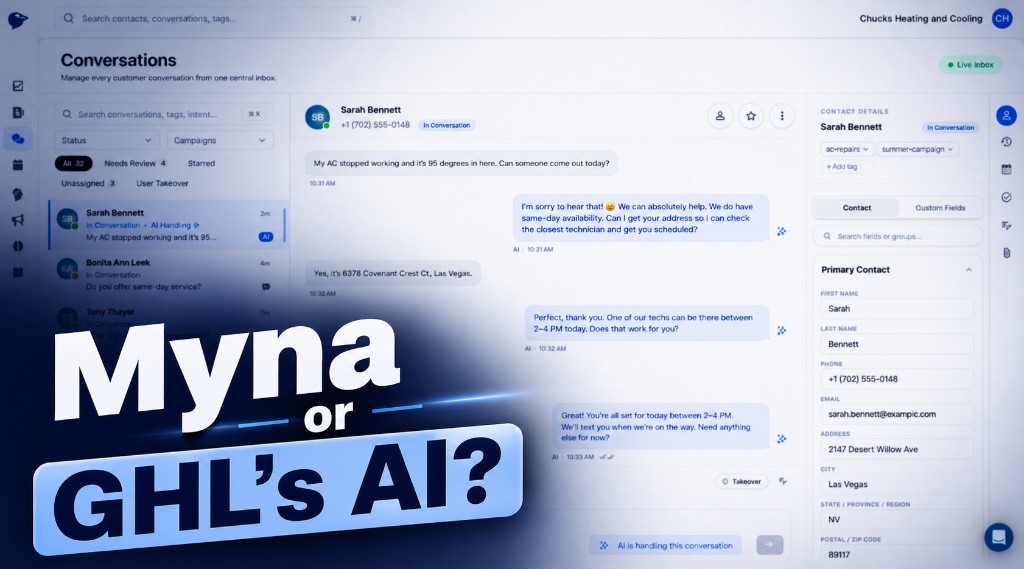
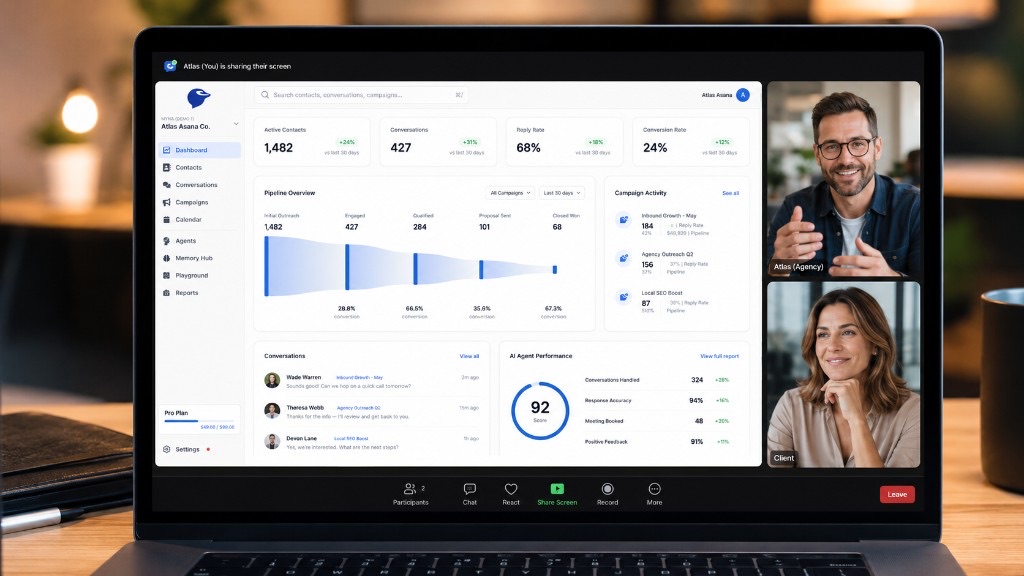
Where it gets genuinely valuable is when that messaging does more than broadcast. A conversational AI platform like Myna sends compliant outreach to your opted-in contacts and then handles the replies automatically, qualifying leads and booking appointments, all within the same legal framework that governs any legitimate business texting. Compliance is built into the setup, so you’re operating correctly from day one.
The Bottom Line
Are SMS blasters legal? The device that hijacks nearby phones to push scam texts is illegal almost everywhere and always will be. The software businesses use to text opted-in customers is legal when you follow consent and compliance rules. Same name, opposite answers. If you’re running a business, you’re dealing with the legal kind, and the only thing standing between you and compliant messaging is doing the setup properly.
If you want messaging that’s compliant by design and books appointments automatically, you can start free at myna.cx.
Related: