


Every HVAC contractor has a list sitting somewhere.
Old leads. Past inquiries. People who called for a quote six months ago and went quiet. Contacts collected from job sites, referrals, and ad campaigns that never converted.
Most contractors assume those leads are dead. They move on, spend more on ads, and start the cycle over.
Upwind LLC tried something different.
The problem every HVAC business knows but rarely talks about
Carlos, the owner of Upwind LLC, didn’t start the company to sit behind a desk chasing leads. He started it because he’s good at the work and because he wanted to build something real for his family.
Upwind is a Nevada-based HVAC company. Good work, solid reputation, consistent demand. Carlos spent years growing the business the hard way: showing up, doing the job right, earning referrals. But like most home service owners whose ambitions outpace their current crew, he had a gap.
Leads were coming in from ads, referrals, and web forms, but not every lead converted on the first contact. Some needed a second touchpoint. Some went cold after an initial quote. Some just needed to be asked again at the right moment.
His team didn’t have time to chase every dormant contact. Reps had active jobs to run. When follow-ups did happen, they were inconsistent. Different rep, different message, different timing.
“I knew there was money sitting in that list. I just didn’t have enough people to go after it, and I wasn’t ready to hire more overhead.” — Carlos, Owner of Upwind LLC
So the list grew. Real revenue potential, sitting untouched.
This isn’t unique to Upwind. It’s the default state of almost every HVAC business operating without a system built to handle follow-up automatically.
Why manual follow-up doesn’t scale
The instinct is to hire someone. Another sales rep, a VA, an answering service. But that creates its own problems.
People need training. They get sick. They have off days. They handle conversations differently depending on their mood, their workload, how the last call went. You can write scripts, but you can’t guarantee execution.
And then there’s timing. A lead that comes in at 9pm on a Friday doesn’t get followed up until Monday morning. By then, they’ve already booked with whoever responded first.
Speed to lead is one of the most well-documented factors in conversion. Respond within five minutes and you’re dramatically more likely to connect. Wait 30 minutes and the odds drop. Wait until Monday and the job is gone.
Manual follow-up has gaps by definition. Those gaps are where revenue leaks out.
What Upwind LLC did instead
Upwind deployed a Myna conversational AI agent across their existing contact database.
The agent didn’t blast a mass message. It started real conversations. Personalized, context-aware outreach that engaged each contact based on where they were in the pipeline. When someone responded, the agent handled it: answered questions, addressed objections, qualified intent, and booked appointments directly into the calendar.
No human needed to be involved until a job was confirmed.
The agent worked evenings, weekends, the gaps between jobs. Every lead got a follow-up. Every response got handled immediately. Every qualified prospect got booked.
The strategy
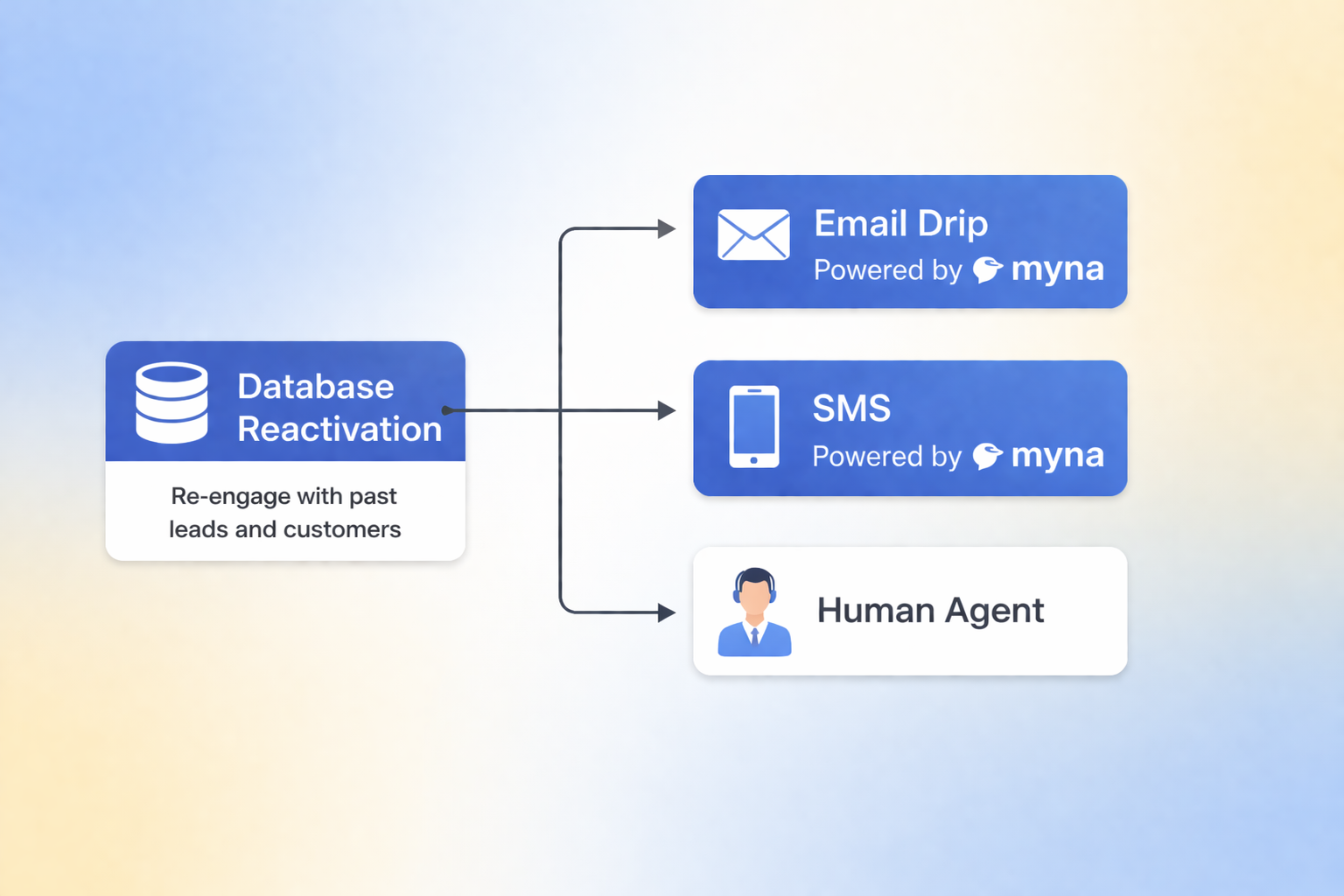
This wasn’t “blast the list and hope.” It was a three-touch strategy across three channels, each playing a different role.
Email, powered by Myna. SMS, powered by Myna. And phone, handled by an actual human.
That third channel is worth explaining. Myna didn’t try to own the phone call. Instead, the platform recommended that Upwind have a real person dial out as the third touch. The idea was to enable a human, not replace one. By the time someone picked up the phone, the lead had already been warmed by two AI-driven touchpoints. The call converted at a much higher rate than cold dialing ever would.
Here’s how the channels performed:
- SMS response rate: 42%
- Outbound phone connection rate: 12%
- Email response rate: 1.9%
SMS did the heavy lifting. But it was the sequenced cadence across all three that drove conversions.
Building the agent
Setting up on Myna started with one question: who should the AI sound like?
Carlos built an agent named Jim. An HVAC specialist who’s witty, casual, and just pushy enough to get the appointment on the books.
“Actually, this is based on my friend Jim. He’s retired and lives in Florida now, but he’s definitely one of the best sales guys I ever had. This fits his personality to a T.” — Carlos
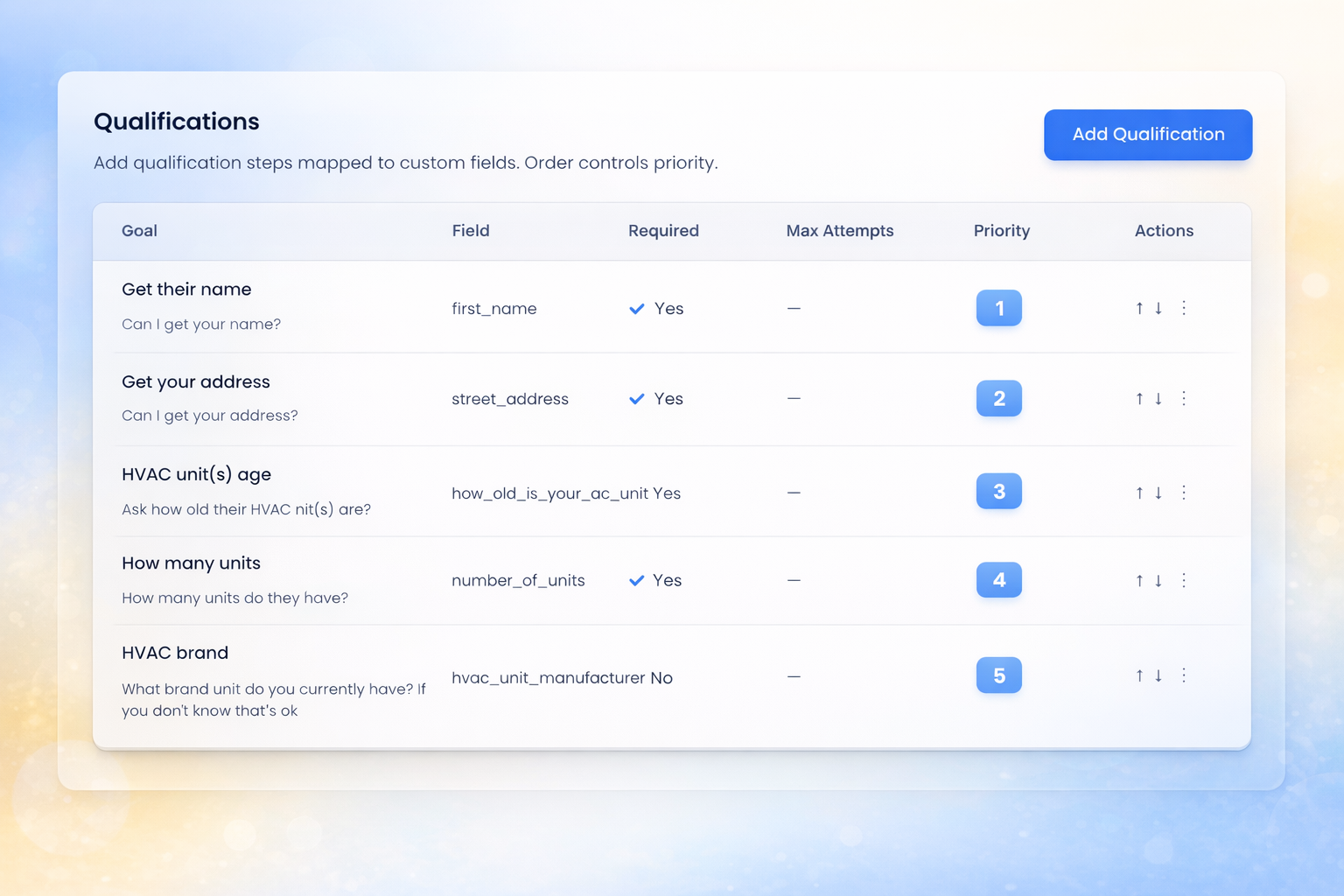
From there, the campaign setup was simple. Carlos set the follow-up cadence, listed the qualifying questions the agent should collect, and uploaded his contact list.
“This took me 10 minutes, not 3 like you promised,” Carlos joked.
He’s a bit old-school and not the fastest on a keyboard, I’ll give him that. But still: agent personality, follow-up sequence, live campaign, all done before lunch. No developers. No integrations team. No onboarding calls.
And soon, even that 10 minutes will shrink. We’re building an AI agent that builds AI agents, so the setup step disappears entirely. More on that soon.
What the conversations actually look like
It’s one thing to say the agent handles conversations. It’s another to see it.
Here’s a real exchange from the Upwind campaign. The agent (Jim) is texting a lead named Brian, collecting qualifying information: name, address, unit age, how many units, and brand.
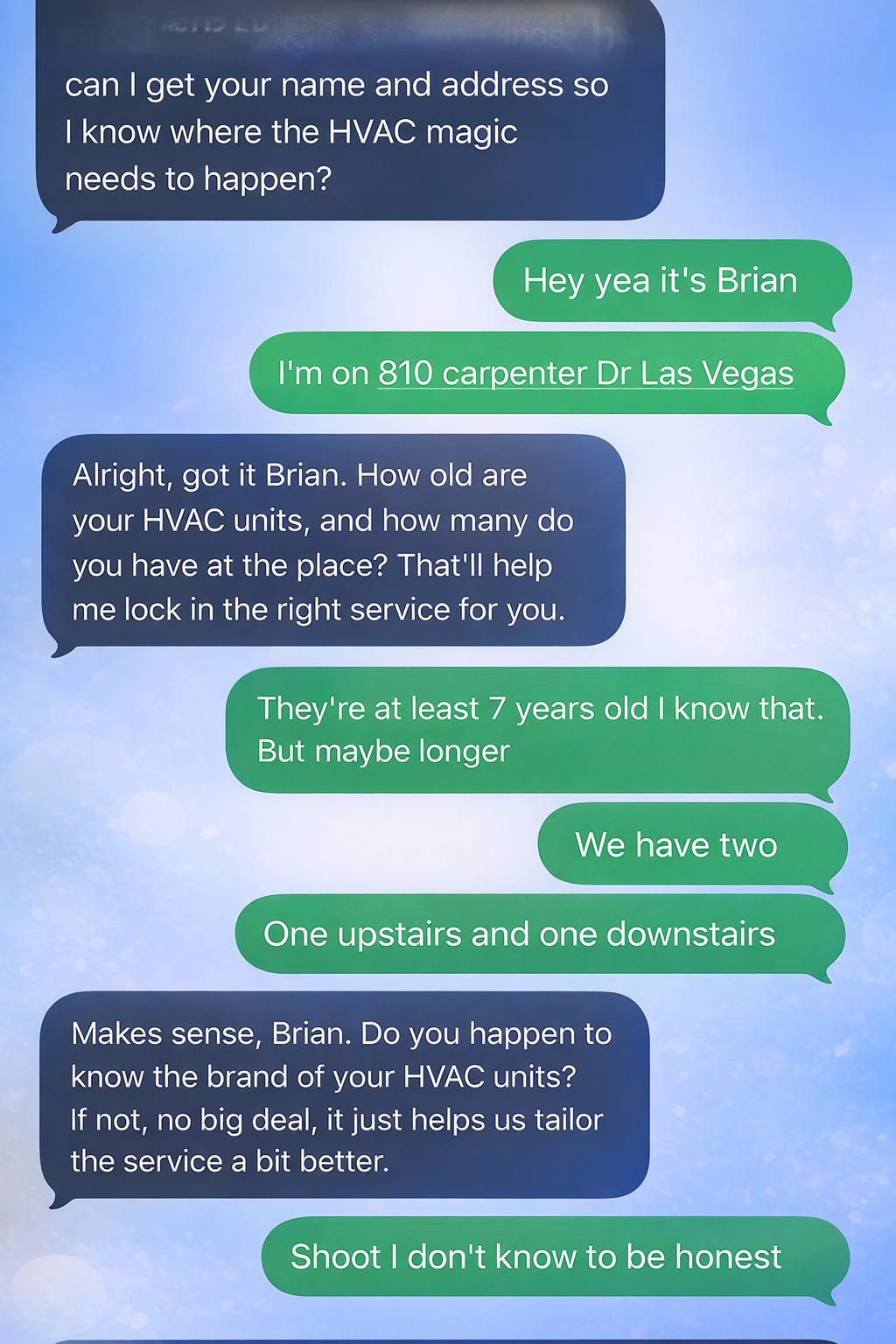
Look at how this plays out. Brian sends three separate messages about his units (“They’re at least 7 years old,” “We have two,” “One upstairs and one downstairs”) and Jim doesn’t skip a beat. No confusion, no repeated questions. He acknowledges what Brian said, then moves to the next qualifier naturally: “Do you happen to know the brand? If not, no big deal.”
That last part is subtle but important. The agent knows when to push and when to give an out. Brian doesn’t know the brand, and that’s fine. The conversation keeps moving. No dead end, no awkward pause, no form that makes the customer feel like they’re filling out paperwork.
This is what Carlos’s qualifying checklist looks like in practice. The agent collects everything the team needs to show up prepared for the job, and the customer just thinks they’re texting a guy named Jim who happens to know HVAC.
The result
In one month:
- 35 additional booked jobs
- Average HVAC ticket value: ~$11,500
- Approximate revenue generated: $402,500
No new ad spend. No new hires. No changes to their existing operation.
The only thing that changed was what happened to the contacts they already had.
What this tells you about your own pipeline
If you’re running an HVAC business and you’ve been collecting leads for more than six months, you have a version of this opportunity sitting in your database right now.
Those contacts aren’t dead. They’re waiting for the right message at the right time, delivered consistently and immediately, without relying on a sales rep to remember to follow up.
That’s what a conversational AI agent does. It doesn’t replace your team. It handles the work your team doesn’t have time for, so every lead gets a real shot at converting. And with plans starting free, there’s no reason not to find out.
The contractors winning in 2026 aren’t spending more on ads. They’re extracting more value from what they’ve already paid to acquire. If you want to dig deeper into how AI is changing customer engagement across home services, start here.
Ready to see what’s sitting in your own pipeline?