


TL;DR: An AI appointment setter contacts leads, qualifies them through conversation, and books appointments automatically. The best systems work across channels like SMS, email, webchat, and WhatsApp, follow up consistently, and connect to your calendar so your team spends more time with warm, scheduled opportunities.
There’s a good chance you’ve heard the term thrown around in a Facebook group, seen it in an ad, or had someone pitch you on it. AI appointment setter. It sounds like marketing speak — the kind of phrase that gets slapped onto any chatbot to make it sound more impressive than it is.
So let’s cut through it.
An AI appointment setter is exactly what it sounds like, but the execution varies enormously between tools. Some of them are genuinely impressive. Others are barely a step above a script with a delay. Understanding what it actually is — and what separates the good ones from the gimmicks — matters if you’re thinking about using one in your business.
The Basic Definition
At its core, an AI appointment setter is a piece of software that takes over the job of contacting leads, having a qualifying conversation with them, and getting a meeting on the calendar — without a human doing any of that work.
That’s the pitch, anyway. And when it works, it genuinely does all three of those things.
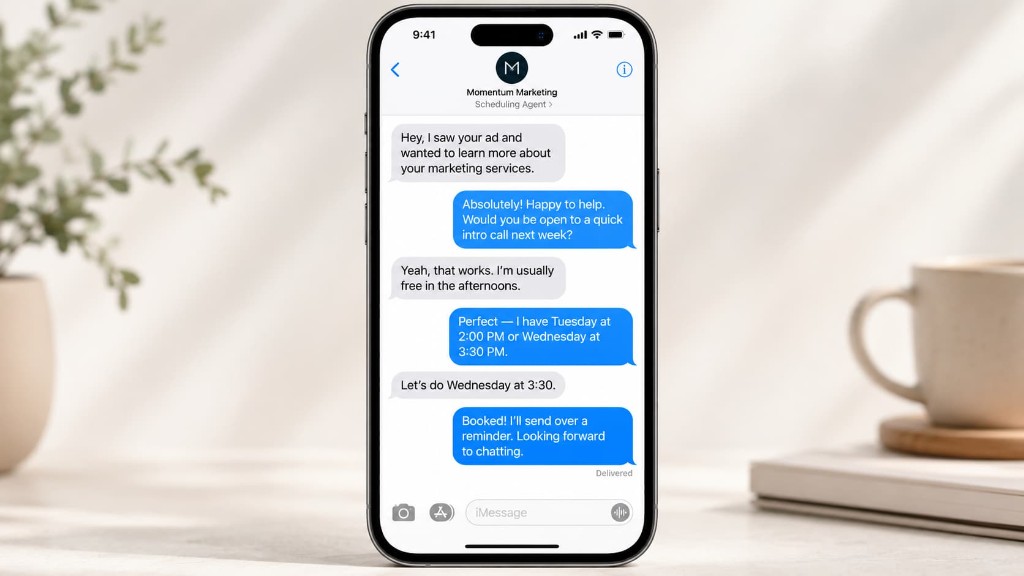
The AI reaches out first, usually by SMS or email, within seconds of a lead coming in. It carries the conversation — answers questions, asks its own, handles common objections — and when the lead is ready to book, it checks the calendar and locks in a time. The human on your team shows up to a scheduled appointment, not a cold list of names to chase down.
That’s a meaningful shift in how service businesses operate. Most businesses are losing leads not because the leads were bad, but because nobody followed up fast enough. Speed is the entire game in lead conversion, and AI doesn’t sleep.
Why “Appointment Setter” and Not Just “Chatbot”
This distinction matters. A chatbot is reactive. It sits on your website and waits for someone to click it. An appointment setter is proactive — it reaches out. It’s closer to having a sales rep whose entire job is the top of the funnel: contact the lead, qualify them, get the meeting.
The difference in approach changes everything. Inbound chatbots serve people who are already interested enough to visit your site and start typing. An AI appointment setter is going after leads who’ve already shown some signal — they filled out a form, clicked an ad, gave you their number somewhere — but haven’t booked anything yet. That gap between “lead came in” and “appointment booked” is where most businesses leak revenue, and that’s exactly what this technology is designed to plug.
How the Conversation Actually Works
This is where most people have questions, because it’s one thing to say “the AI has a conversation” and another to explain what that looks like in practice.
When a lead comes in, the AI fires off an opening message. Something direct, something that sounds like a person sent it. Not “Hello! I am an automated assistant here to help you!” — that kills the conversation immediately. A good AI appointment setter opens the way a sharp sales rep would: acknowledge the lead, move toward a next step.
From there, the conversation is dynamic. The lead might ask a question. The AI answers it. The lead might say they’re not ready yet. The AI doesn’t fold — it follows up in a day or two. The lead might give a one-word response and go quiet. The AI reads that and adjusts its next message accordingly.
This back-and-forth can go on for days. Human setters get tired, skip follow-ups, call it a dead lead after two tries. The AI is indifferent to rejection. It keeps working the lead until there’s a clear yes, a clear no, or the follow-up window closes.
When the lead agrees to meet, the AI handles the scheduling. It checks what’s available on your calendar, offers times, confirms the booking, and sends a confirmation to the lead. Some platforms also send reminders before the appointment to cut down on no-shows.
The whole thing — from first message to booked appointment — can happen in under an hour if the lead is responsive. Or it can take two weeks of intermittent follow-up. Either way, it happens without you touching it.
What Channels Does It Work On?
The channel matters more than most people realize, because different leads respond very differently depending on how you reach them.
SMS is the dominant channel for service businesses — contractors, home services, solar, HVAC, roofing, plumbing. Texts get read. Most people have a near-Pavlovian response to a notification on their phone. Open rates on SMS hover around 98%, compared to roughly 20% for email on a good day. For service businesses where your leads are mostly homeowners or local business owners, SMS is the fastest path to a real conversation.
Email is better suited to B2B or longer sales cycles where the lead expects more formal communication. It also gives you more room — you can include context, attachments, links — but the tradeoff is that inboxes are crowded and response times are slow.
WhatsApp is worth mentioning because outside of the US, it’s the default messaging platform in a huge number of markets. In Canada, parts of Europe, and across Latin America, WhatsApp often performs better than SMS. For businesses operating in those markets, an AI appointment setter that supports WhatsApp isn’t optional.
Webchat is purely inbound — someone is already on your website and initiates contact. It converts well because intent is high, but it’s a different use case than proactive outreach.
Most serious platforms support multiple channels. The right choice depends on who your customers are and how they actually communicate.
The Compliance Side Nobody Talks About Enough
If you’re going to use an AI appointment setter for outbound messaging, compliance depends heavily on where your customers are and which channel you’re using. SMS in the United States is not governed the same way as WhatsApp in Latin America, email in Europe, or text messaging in Canada.
In the United States, the big SMS concept is A2P 10DLC registration. A2P stands for Application-to-Person. 10DLC refers to 10-digit long codes — the standard phone numbers used for business SMS. The major carriers (AT&T, T-Mobile, Verizon) require that businesses register their messaging campaigns through an official registry before sending at any real volume.
TCPA compliance is the other major US piece. The Telephone Consumer Protection Act restricts how and when you can contact people by SMS. You need documented consent. You need an opt-out mechanism. If you’re sending to cold contacts without proper consent, you’re exposed.
In Canada, CASL is the law businesses usually need to understand. It governs commercial electronic messages and puts real weight on consent, identification, and unsubscribe handling. In Europe and the UK, GDPR and PECR shape how businesses collect, store, and use contact data for outreach. Across Latin America and many international markets, WhatsApp is often the primary channel, and compliance includes both local privacy rules and WhatsApp’s own business messaging policies.
The common thread is simple: you need permission, identity, and opt-out handling. People should know why you’re contacting them, who is contacting them, and how to stop receiving messages. A serious AI appointment setter platform should make those basics easy to manage across regions and channels.
None of this is meant to be intimidating — it’s standard operating procedure for any legitimate messaging platform. But if a tool you’re evaluating never brings up consent, opt-outs, sender registration, or regional messaging rules, that’s a red flag.
AI Appointment Setter vs. Human Appointment Setter
This comparison comes up constantly, and it’s worth being honest about both sides.
A skilled human appointment setter brings something AI doesn’t: genuine intuition. They can read a tone of voice, improvise in a genuinely weird conversation, build real rapport. In complex, high-trust sales situations — commercial contracts, enterprise deals — that still matters.
But for the volume-based outreach that most service businesses rely on, the math heavily favors AI:
| Human Setter | AI Appointment Setter | |
|---|---|---|
| Monthly cost | $3,000–$6,000+ | $49 |
| Working hours | Business hours only | 24/7 |
| Simultaneous conversations | 1 | Unlimited |
| Response consistency | Variable | Identical every time |
| Follow-up discipline | Depends on the person | Never skips |
| Time to deploy | Weeks of hiring and training | Minutes |
The failure mode of a human setter is usually inconsistency. They have good days and bad days. They forget to follow up. They move on from a lead too quickly because they’re managing 50 others. The failure mode of an AI appointment setter is usually the opposite: it’s consistent, but it can feel mechanical if the underlying prompts and personality aren’t built well.
The businesses getting the most out of AI appointment setters aren’t replacing their sales teams — they’re using AI to handle the top of the funnel so their human reps can focus on closing deals that are already warm.
What to Look For When Evaluating One
Not all AI appointment setters are built the same, and the differences between them are significant in practice.
Conversation quality is the most important factor and the hardest to evaluate from a demo. Ask to see real conversation logs. Does it sound like a person wrote it, or does it sound like a template? Can it handle a lead who goes off-script, asks a question the AI wasn’t “expecting,” or pushes back? The best platforms have genuinely adaptive language. The worst ones break the moment a lead does anything unexpected.
Qualification flexibility matters if your business has specific criteria before you’ll take a meeting. An HVAC company might need to know whether it’s a residential or commercial job. A solar installer might need to know if the homeowner owns the property and what their monthly electric bill is. If the platform only supports generic qualification flows, you’re going to get unqualified appointments clogging your calendar.
Calendar integration sounds obvious but varies a lot in how well it’s implemented. Connecting to Google Calendar is table stakes. The more important question is how the booking flow works for the lead — is it seamless, or does it send them to a third-party link that breaks the conversation momentum?
Speed to first message is measurable and matters. If there’s a 20-minute lag between a lead coming in and the AI sending the first message, you’ve already lost a chunk of them. Leads cool fast. The best systems fire the first message in under 60 seconds.
Reporting and visibility is underrated. At minimum, you want to know how many conversations started, how many qualified, how many booked, and how many went dead. That data tells you whether your messaging is working or needs to be adjusted.
What Kind of Business Actually Benefits From This
AI appointment setters work best in a specific situation: you have a repeatable sales process that starts with some kind of consultation, site visit, or discovery call, and you have a steady flow of leads that aren’t being contacted fast enough or consistently enough.
If that’s you — and for most service businesses, it is — the tool essentially automates the most time-consuming and failure-prone part of your operation.
They’re also particularly effective for reactivating old leads. Most businesses are sitting on a spreadsheet or CRM full of contacts who came in at some point, never booked, and were never followed up with again. Those aren’t dead leads. They’re leads that never got a proper conversation. Running an AI campaign against that list is one of the highest-ROI moves a service business can make, because there’s no acquisition cost involved — you already paid for those leads the first time around.
Where they don’t work as well: purely referral-based businesses with no systematic lead flow, or sales processes so complex that the first conversation requires deep expertise from the first message. There are industries where AI handles initial outreach well but the actual appointment requires a specialist from word one. Know which category you’re in.
The Bottom Line
An AI appointment setter is a system that contacts your leads, qualifies them through a real conversation, and books appointments into your calendar — automatically, around the clock, at a fraction of the cost of a human doing the same job.
The technology has matured significantly in the past two years. The early versions were clunky, obvious, and easy to see through. The current generation, when built well, is genuinely hard to distinguish from a sharp human rep handling the top of the funnel.
Whether it’s worth using comes down to one question: are you losing booked appointments because leads aren’t being contacted fast enough, or because follow-up falls through the cracks? If yes, an AI appointment setter is probably the most direct fix available.
Related: