



TL;DR: Small businesses miss 62% of calls during business hours — and 85% of those callers never try again. AI customer service closes that gap without a hire. Every inquiry gets an immediate, intelligent response regardless of time, volume, or whether you’re on another job.
Running customer service as a small business has always meant choosing between two bad options: pay for staff you can’t always keep busy, or let inquiries fall through the cracks when you’re stretched thin. In 2026, there’s a third option that didn’t meaningfully exist two years ago.
The Small Business Customer Service Gap
Large companies have dedicated support teams. Small businesses have whoever picks up the phone — which is often nobody.
The average small business misses 62% of incoming calls during business hours, and 85% of callers who can’t reach someone never try again. That’s not a customer service problem. That’s a revenue problem. Every missed call or unanswered text is a potential job that went to a competitor who happened to pick up.
The traditional solution — hire someone — costs $35,000 to $50,000 per year for a full-time customer service rep, and they still only work set hours, handle one conversation at a time, and have inconsistent days. The math on what that actually costs compared to the alternatives doesn’t favor the hire for most small businesses.
Where AI Fits for a Small Business
AI customer service for small businesses isn’t about building a call center. It’s about making sure every customer inquiry gets a real, intelligent response immediately — regardless of when it comes in or how many are happening at once.
For most small businesses, the highest-value applications are straightforward:
- Responding to new inbound leads before a competitor does
- Answering common questions about services, pricing, and availability
- Qualifying customers before they get to a human
- Booking appointments without phone tag
AI-driven automation has led to a 30% decrease in customer service operational costs on average. For home service businesses — where a single missed lead can mean a $5,000–$15,000 job going to a competitor — the ROI is immediate and measurable.
SMS Is the Right Channel for Small Business Customer Service
Email response rates hover around 20 to 30 percent. Phone calls go to voicemail more than half the time. SMS open rates consistently sit above 90 percent, with most messages read within three minutes.
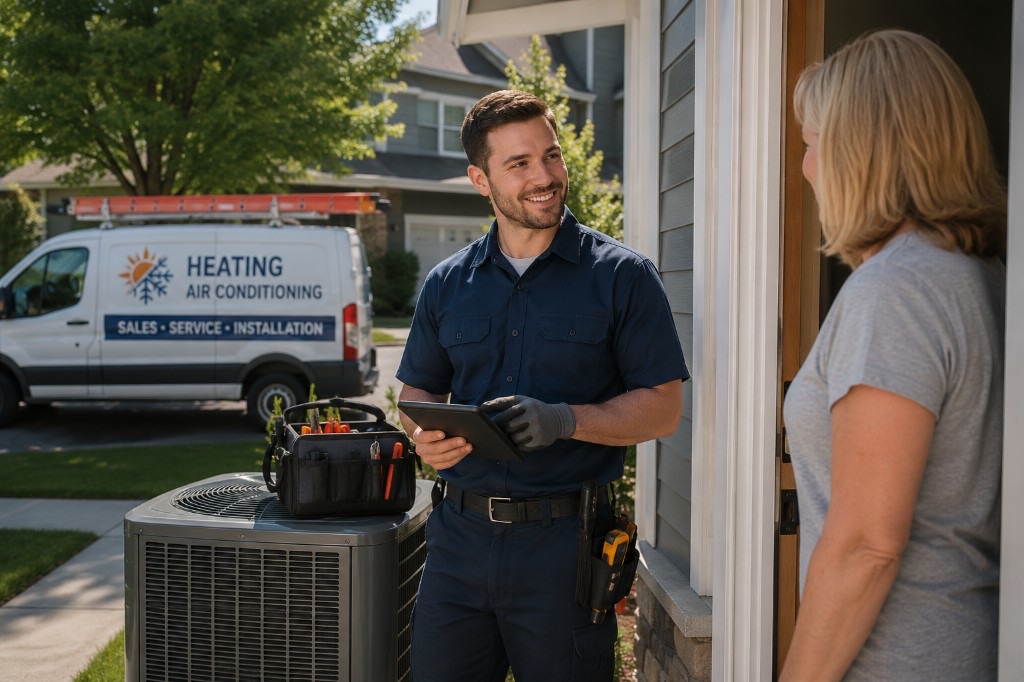
For a home service business — HVAC, plumbing, roofing, solar, cleaning — where customers want fast confirmation that someone is on the way or that an appointment is booked, SMS is the channel that actually gets through. It’s also the channel customers are most comfortable using to ask quick questions, confirm appointments, and get updates.
AI texting built on a proper reasoning layer handles all of that automatically, in a conversation that feels natural rather than scripted.
The Difference Between AI Customer Service and a Chatbot
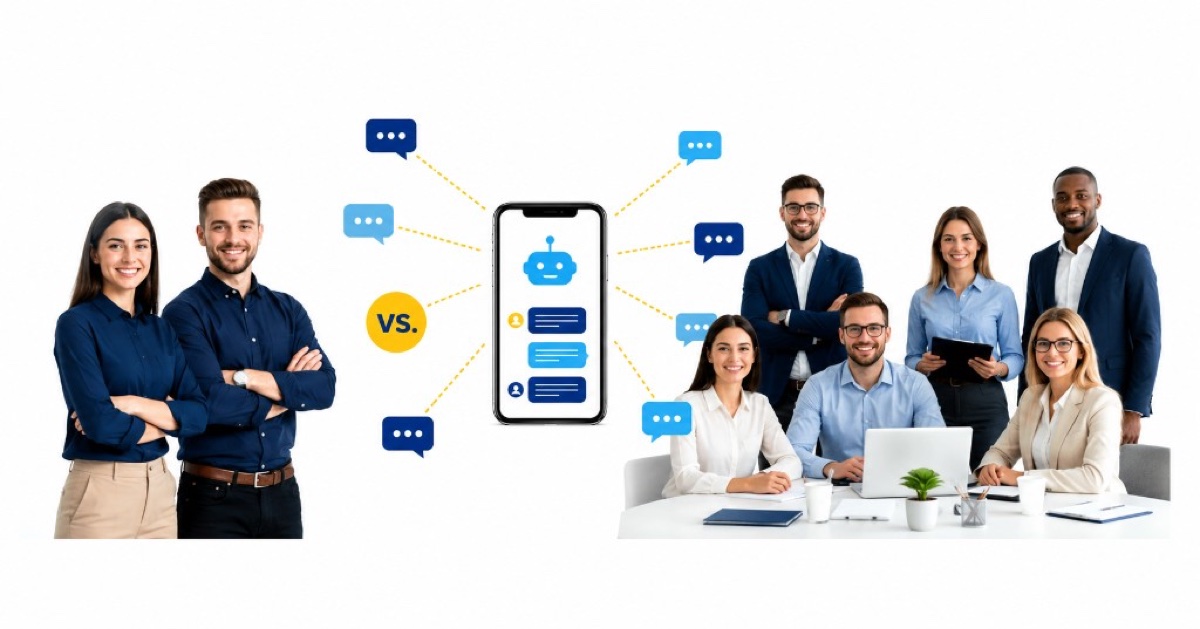
Most small businesses that have tried AI customer service tried a chatbot first. A branching script that handles three scenarios well and breaks on everything else. The customer asks something unexpected, gets a nonsensical response, and leaves frustrated.
56% of people have negative feelings about companies using AI as part of their customer experience — and that number is almost entirely driven by bad chatbot experiences, not by AI that actually works.
The distinction that matters is whether the system uses a static script or a reasoning layer. A reasoning layer reads the full conversation, evaluates context, and decides what to say next the way a trained employee would. It handles unexpected questions, objections, and off-script replies without falling apart.
89% of people believe companies should always offer the option to speak with a human — and a well-configured AI system handles escalation gracefully, flagging conversations that need human involvement rather than trying to handle everything automatically.
If you’re evaluating platforms, this comparison of the best conversational AI tools for small businesses breaks down what each one actually does and where they fall short.
What Small Businesses Are Actually Using It For
Lead follow-up is the most common use case. A customer fills out a form or sends an inquiry. The AI responds within seconds, answers their initial questions, qualifies them, and books the appointment — all before a competitor who relies on manual follow-up has even seen the notification.
Database reactivation is the second most common. Old leads who went cold, past customers who haven’t returned, prospects who requested a quote but didn’t convert. An AI agent works through an entire contact list systematically, having real conversations with each contact, without any manual effort.
Appointment reminders and confirmations round out the core use cases — reducing no-shows without requiring someone to manually call or text before every booking.
The Adoption Curve You’re In
64% of small businesses plan to adopt AI for customer service by 2026, up from 38% in 2024. The businesses that move first get a real competitive advantage — particularly in service industries where the difference between winning and losing a job often comes down to who responds first.
91% of customer service leaders say they’re under pressure to implement AI in 2026. At the enterprise level, that pressure comes from the boardroom. At the small business level, it comes from customers who now expect an immediate response and go elsewhere when they don’t get one.
Getting Started
Myna starts free. You can configure an AI agent for your specific business — your services, your service area, your tone, your qualification questions — and have it running against real customer inquiries the same day. No developer required, no CRM integration needed.
For home service businesses, the ROI shows up within the first month. One or two additional booked jobs from leads that would have otherwise gone cold typically covers the platform cost several times over.