TL;DR: HVAC has a scheduling problem most trades do not have as badly: the phone rings hardest exactly when you can least answer it. A heat wave hits, calls surge, techs are on rooftops, the office is slammed, and leads pile up unanswered. The cruel part is that after-hours and peak-season leads are often your highest-value emergency jobs. AI text response catches every lead the instant it comes in, day or night, qualifies whether it is a no-cool emergency or a routine tune-up, then books it or routes it to dispatch. Myna does this through real two-way SMS conversations, not voice hype.
Every HVAC owner knows the moment.
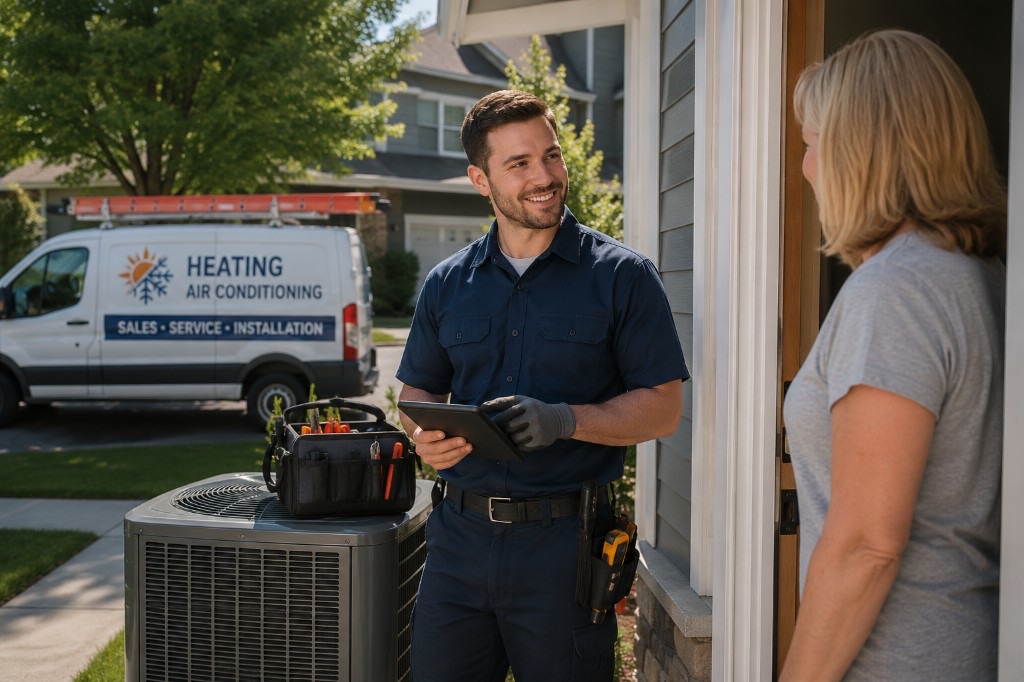
It is 100 degrees, it is 6 PM, a homeowner’s AC just died, and they are calling you first. Your dispatcher is on another line. Your techs are in attics. The call rings out.
By the time someone checks messages, that homeowner has already booked with whoever picked up.
You did not lose that job to a better company. You lost it to a company that answered.
That is the whole HVAC problem in one scene, and it is worth being precise about why it is worse in this trade than almost any other.
Why HVAC leads are different
Two things make HVAC lead response uniquely unforgiving: urgency and value.
The urgency is obvious. When a furnace dies in a cold snap or an AC quits in a heat wave, the homeowner is not building a comparison spreadsheet. They have a house that is too hot or too cold, and maybe kids or elderly parents inside it. They call two or three companies in a row and book with the first one that responds with something useful.
A large share of HVAC inbound is urgent or same-day demand, especially during peak season. That means the five-minute rule is not a nice-to-have. It is the difference between the job and the callback that never converts.
The value is the part owners underweight. Emergency and after-hours calls are not just any jobs. They are often your highest-ticket work. An emergency diagnostic plus repair can run into four figures, and a system replacement runs far higher. So the leads that come in when you cannot answer, at 9 PM, on a Sunday, during a heat wave, are often your best-paying opportunities.
And it does not stop at one job. A single HVAC customer relationship can be worth thousands over the life of the equipment through maintenance plans, repairs, eventual replacement, and referrals. Miss the first call and you do not just lose one service ticket. You lose the whole relationship and everything it would have become.
The peak-season paradox
Here is the trap that is specific to HVAC.
Your phone rings most during weather extremes. A July heat wave or a January freeze can drive call volume far above normal. That is the good news and the disaster at the same time, because those are precisely the days your team is most overwhelmed.
Techs are booked solid. The office cannot keep up. Hold times climb. Calls spill to voicemail.
So your highest-demand days are also your highest-miss days. The season that should make your year is the same season quietly leaking your biggest jobs.
A human receptionist can only talk to one caller at a time. When thirty people call before 9 AM after a weekend cold snap, twenty-nine are waiting, and many of them hang up. This is not a people problem. Your staff is working hard. It is a capacity problem, and you cannot hire your way out of a surge that only happens a few weeks a year.
Myna does not have that ceiling. It can answer the first lead and the hundredth at the same speed, at 2 AM or during the worst afternoon of the summer.
The missed call is the entire game
Most owners assume a missed call is recoverable.
It usually is not.
Research on caller behavior has been consistent for years: most people who reach voicemail do not leave a message and do not wait around. They hang up and call the next company. A homeowner with a dead AC in July is the least patient customer you will ever have.
This is where text response earns its place, and it is why this does not require a voice-bot gimmick.
The instant a call goes unanswered or a web form comes in, Myna can send a real text: “Sorry we missed you. Is this a no-cooling, no-heat, or maintenance issue? Send your address and what is happening and we will get you scheduled.”
That text lands before the homeowner has finished dialing the next number, and it pulls them back into a conversation with you instead of a competitor.
Catching the missed call by text is the single highest-leverage fix in the HVAC front office. We covered the broader after-hours issue in why HVAC companies lose leads after hours, but the short version is simple: the lead you answer is the lead you can book.
What the AI actually does
Strip away the marketing and here is the concrete job Myna handles for an HVAC company.
It responds instantly to every lead from every source: missed calls, web forms, Google Local Services, lead platforms, website chat, imported contact lists, and CRM triggers. It starts the conversation within seconds, around the clock.
Then it triages the problem the way a good CSR would:
- Is this no cooling, no heat, water around the unit, strange smell, strange noise, thermostat issue, quote request, or routine maintenance?
- Is anyone in the home vulnerable to extreme heat or cold?
- What is the address and service area?
- What type of system is it?
- Is this urgent dispatch or a normal appointment?
From there, it routes. A true emergency can be flagged to your on-call tech with the details already collected. Routine work can be booked straight into your calendar. Replacement interest can be tagged for sales. Everything can log back to your CRM so the job is ready to run.
Because Myna holds a real two-way conversation instead of firing a one-way message, it can ask the few questions that decide urgency and routing. That is exactly the difference between broadcasting and actually converting a lead.
The same reason a plumber cannot stop mid-job to answer applies to your techs on a rooftop. Myna covers that gap without forcing anyone to lift a phone.
The revenue already sitting in your database
Inbound is only half of it.
The other half is the maintenance revenue most HVAC shops know they should be capturing and never get to.
You have club members due for seasonal tune-ups that nobody has had time to call. You have lapsed maintenance agreements, unsold estimates, no-shows, and past customers who would book again if someone reached out at the right moment.
That is real revenue sitting in your member list, and it goes untouched because outbound calls are the first thing that falls off when the team is busy.
Myna works that list automatically over text: seasonal tune-up reminders, membership renewals, quote follow-up, and reactivation campaigns. It can also confirm every booked appointment ahead of time, so your tech stops burning an hour driving to a no-show.
None of that requires adding a person.
This is exactly the play Upwind LLC used when it turned a dormant HVAC contact list into 35 extra booked jobs in one month. The full case study is here: How Upwind LLC booked 35 extra HVAC jobs with Myna.
Why not just hire someone or use a call center
Because neither solves availability.
A full-time receptionist is a real annual cost and still does not cover nights, weekends, holidays, peak-season surges, or multiple simultaneous conversations. A generic answering service can take a message, but it often does not know HVAC terminology, cannot properly qualify the job, and may not book into your calendar.
That means the lead still waits.
We laid out the full comparison of AI versus a human appointment setter, and the short version is that even a great hire has a schedule and a capacity ceiling. HVAC demand blows past both.
If you want the honest cost picture, here is what an AI appointment setter actually costs.
Getting started
You do not need to overhaul your operation.
Pick the leak that is costing you the most, usually after-hours and peak-season missed calls, and put automated text response on it first.
What to look for is straightforward: it should respond within seconds across every lead source, qualify with real HVAC context instead of a generic script, book into your existing calendar or dispatch process, handle the compliance side of business texting, and hold a genuine two-way conversation.
For a wider view of the options, we compared the best conversational AI for small businesses.
The leads are already calling. The ones you are losing are the ones you cannot answer, and they are often your best jobs.
Myna is built to catch them, qualify the emergency from the tune-up, and book it, on the phone number and calendar you already use.
Related reading
- Why HVAC Companies Lose 40% of Leads After Hours
- How Upwind LLC Booked 35 Extra HVAC Jobs in One Month
- AI Texting for Plumbing Companies
- AI Appointment Setter vs. Human Appointment Setter
- How Much Does an AI Appointment Setter Cost?
- Best Conversational AI for Small Businesses in 2026