
TL;DR: Agencies spend almost all their energy generating leads and far less energy making sure those leads get answered fast. That gap is where the money dies. A lead that waits hours for a response is worth a fraction of one answered in minutes, which means slow response can silently double or triple the client’s real cost per worked lead without anyone touching the ad account. It also creates churn, because when the leads do not convert, the agency usually gets blamed. Speed-to-lead is not just the client’s operations problem. It is your retention problem.
Most agencies optimize the wrong half of the funnel.
You tune the ad creative. You test new audiences. You push the cost per lead down another two dollars. You send the client a report full of green arrows. Then the leads land in the client’s inbox, CRM, or a notification nobody checks, and they sit there.
For an hour. For an afternoon. Until Monday.
By the time the client calls back, the lead has already booked with someone else. You generated it. They lost it. And when the month ends and the pipeline looks thin, guess who the client thinks failed.
This is the hidden cost of slow lead response, and it is more expensive than almost any ad account inefficiency you will ever find.
The math nobody puts in the report
Say you run lead gen for an HVAC client. Six thousand dollars a month in ad spend, two hundred leads, thirty dollars a lead. Clean numbers. The client likes the volume.
Now look at what happens after the lead comes in. The owner is on a roof, on a job, or in the truck. It is 7 PM and the office is closed. The lead waits. For many local service businesses, average response time is measured in hours, not minutes.
Here is the part that does not show up in the report: a lead that waits hours is not the same asset as a lead answered in minutes. It is a worse asset. Often it is already dead.
So while the report still says thirty dollars per lead, the real cost per lead that actually gets worked and has a chance to convert is much higher. A big share of the leads went cold before anyone said a word. The ad account did not change. The budget did not change. But the effective cost per reachable lead quietly doubled, and it happened entirely in the gap between the form fill and the first reply.
You can be the best media buyer in the world and still watch half the value evaporate in a gap you are not measuring.
What the research actually says
The speed-to-lead numbers get thrown around constantly, and they are miscredited almost as often. The two studies agencies should know are different.
The famous “five minutes versus thirty minutes” finding comes from the 2007 Lead Response Management Study run by Dr. James Oldroyd in partnership with InsideSales.com while he was at MIT Sloan. The study analyzed more than 15,000 leads and 100,000 call attempts. It found that contacting a lead within five minutes instead of thirty made sales teams roughly 100 times more likely to make contact and 21 times more likely to qualify the lead.
That study is often attributed to Harvard. It is not Harvard’s.
The Harvard study is a different one. In 2011, Harvard Business Review published “The Short Life of Online Sales Leads”, based on an audit of 2,241 U.S. companies. The researchers found that the average firm took 42 hours to respond to a web-generated lead, and 23% never responded at all. Firms that tried to contact a lead within the first hour were nearly seven times more likely to qualify the lead than firms that waited even one hour longer.
Put the two together and the picture is brutal. The window where a lead is most reachable is measured in minutes. The average business responds in the span of days. The gap between those two numbers is the gap being funded by the client’s ad budget.
None of this is new. That is the point. The research has been around for years, but the behavior has not changed because the fix was never just a mindset problem. It was a structural one.
Why this is your problem, not the client’s
Here is the reframe that matters for agencies.
When a client’s leads do not convert, the client usually does not run a root-cause analysis. They do not pull response-time logs. They look at the invoice with your name on it and decide the leads were bad.
That is the whole thought process.
Slow response on their end becomes churn on yours.
You are being judged on an outcome you do not fully control, because the last mile, the actual answering of the lead, happens inside the client’s business, on the client’s schedule, at the mercy of whoever happens to be near a phone. You can do your job perfectly and still get a red result.
Fixing speed-to-lead is not a favor you do for the client. It is one of the highest-leverage ways to protect your own retention and margin. Close that gap and every lead you generate becomes more valuable. Your reporting looks better without spending another dollar. The client stops blaming the campaign for revenue that was leaking out after the click.
The five costs, stacked
Slow response does not cost you one thing. It costs you five, and they compound.
Wasted ad spend. Every lead that goes cold before contact is money you already spent to acquire an asset the business never properly worked.
The competitor. Service buyers rarely wait. They fill out two or three forms and go with whoever answers first. Your slow lead becomes someone else’s booked job. You did not just lose the lead. You handed it to a competitor.
Database rot. The uncontacted leads do not disappear. They pile up in the CRM as dead weight: thousands of “interested” people nobody called back while they were still interested.
Client churn. This is the one agencies feel directly. If the pipeline does not move, the client does not renew, even if the real failure happened after the lead was delivered.
Reputation. A business that ghosts inbound inquiries trains the market to expect silence. That damage is slower to show up and harder to undo than any single lost appointment.
Why “just respond faster” does not work
The standard advice is to tell the client to respond faster. It is useless advice, because it ignores why they are slow in the first place.
They are slow because the work makes it impossible. A plumber cannot answer the phone while under a sink. A roofer is not checking form fills mid-install. A solar rep might be on-site for a walkthrough. And nobody, in any trade, is reliably answering new leads at 9 PM on a Saturday, which is exactly when a lot of home service inquiries come in.
The gap is not laziness. It is a person being physically unable to be in two places at once.
Throwing a human at it does not fully fix the structure either. We ran the full cost comparison of AI versus a human appointment setter, and even a dedicated hire has hours, sick days, lunch breaks, ramp time, and a hard ceiling on how many conversations they can hold at once. The lead that comes in during the gap still waits. You have just paid four to seven thousand dollars a month for a smaller gap.
The only thing that actually closes the window is a response that fires the instant the lead comes in, every time, regardless of hour, volume, or what the owner is doing.
That means automation, but not a one-way blast. There is a real difference between broadcasting a message and actually converting a lead. Only one of them can qualify, answer questions, handle objections, and book the appointment.
What an agency should actually do with this
The opportunity here is not just “fix a leak.” It is a service you can package.
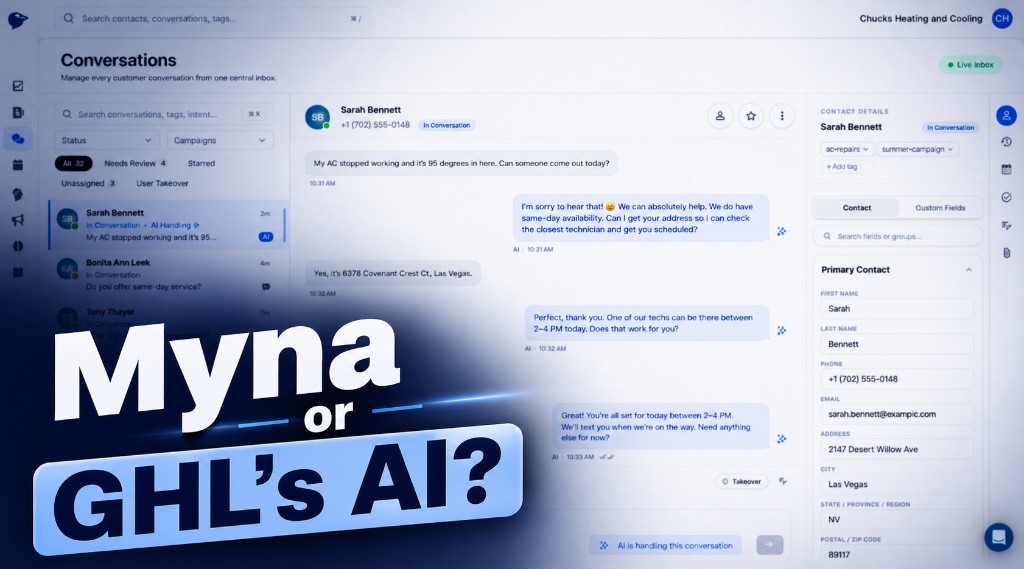
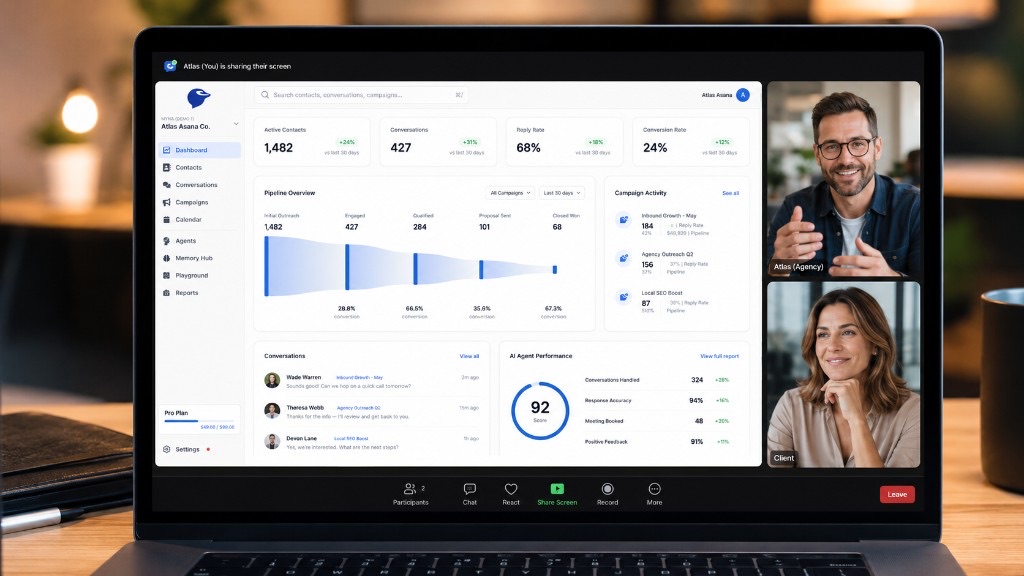
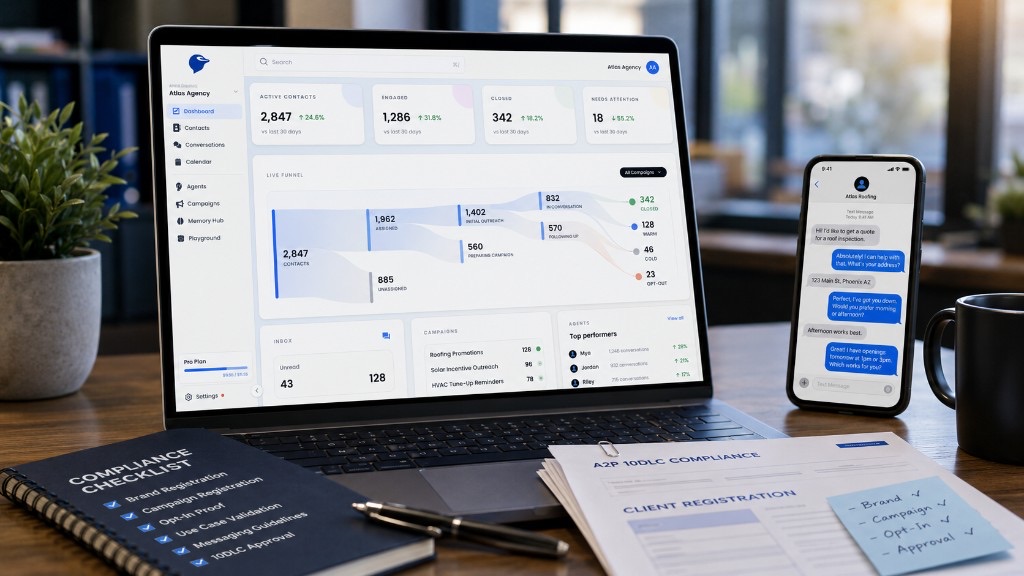
Most of your clients already have a CRM, often GoHighLevel, sitting on a pile of leads that never got a fast response. The fix can layer on top of what they already run: an AI agent that texts every new lead within seconds, qualifies them, answers basic questions, and books the appointment straight into the client’s calendar.
You are not ripping anything out. You are closing the one gap that was quietly killing the ROI of everything else you do.
For the agency, that means stickier clients, better pipeline reporting, and a new line item built around a problem the client already has. If you want to compare tools for smaller service businesses, we broke down the best conversational AI for small businesses. If pricing is the objection, here is what an AI appointment setter actually costs once you factor in the real operating numbers.
The leads are already being generated. That part you handled. The money is leaking in the ninety seconds after the form fill, and those are the cheapest ninety seconds you will ever fix.
Related reading
- AI Appointment Setter vs. Human Appointment Setter
- AI Texting for Plumbing Companies
- Best Conversational AI for Small Businesses in 2026
- How Much Does an AI Appointment Setter Cost?
- Why Solar Installers Who Respond in Under 5 Minutes Win the Deal