
TL;DR: For most service businesses, 5 PM is not the end of the lead day. It is the start of the busiest part. Industry analyses often put 40% to 60% of home service leads outside standard weekday hours, with the evening window as one of the highest-intent blocks of the week. The average business is closed during its own peak demand, so those leads get voicemail, an answering service that takes a message, or nothing until Monday. For an agency, this matters because your ads generate some of their best volume at night, right when your client is least able to respond.
Here is a number most business owners have never looked at: what percentage of their leads come in after the business closes.
They do not look at it because they assume the answer is “not many.” The business runs 8 to 5, so the leads must mostly come in 8 to 5, right?
Wrong, and it is not close.
Across home service categories, the same pattern shows up again and again: a large share of leads arrive outside standard weekday business hours. Evenings. Weekends. Holidays. In many categories, the single busiest block is not a weekday afternoon. It is the evening, after the business has shut off the lights.
Which means the average service business is closed during one of the busiest lead windows of its week. On purpose. Every day.
The after-hours leads are the good ones
It gets worse, because these are not leftover scraps. The evening lead is frequently the best lead you will get all day.
Think about when a homeowner actually decides to deal with something. They notice the AC is struggling during the workday, but they are at work, so they do nothing. They get home. They have dinner. They sit down at 8:45 PM, pull out their phone, and start looking for someone to fix it.
That is the moment the decision goes live.
At that moment they are high-intent, present, and ready to book. They are not casually browsing. They have a problem, they have decided to solve it, and they are contacting two or three businesses in a row to see who responds.
The person who answers gets a warm, motivated buyer sitting at home with their calendar open. The businesses that do not answer get nothing, because the homeowner already booked with the one that did.
The evening window is not the low-value tail of the day. It is a high-intent core of the day, and it is the exact window most businesses do not cover.
Why this is an agency blind spot
If you run ads for service clients, this should land hard.
Lead volume does not come in evenly across the day. It often clusters in the evening, because that is when people are off work and on their phones. Cheaper attention, higher volume, and buyers with time to actually submit the form or make the call.
Now line that up against when the client responds. The client responds in the morning, when someone is back at a desk or between jobs. So the leads your ads generate at night flow straight into the window where the client is asleep.
You are optimizing delivery for the exact hours your client cannot act on. The better your evening ad performance, the bigger the pile of unanswered leads waiting the next morning.
This is why a campaign can look great in the ad platform and terrible in the client’s actual bookings. The clicks are real. The form fills are real. The leads just aged out overnight before anyone said a word, and the client, looking only at booked jobs, decides the leads were junk.
You know they were not. But you are the one holding the invoice.
Voicemail does not catch it
Most businesses think they have this covered. They do not, because the standard fixes fail in the same place.
Voicemail is the most common “solution” and usually the weakest. Invoca has reported from platform data that less than 3% of callers who reach voicemail leave a message. A homeowner calling three businesses in a row is not going to leave a voicemail and wait. They are going to hang up and call the next number, where a competitor might pick up.
Voicemail does not capture the lead. It documents the moment you lost it.
Answering services are a step up, but they often miss the point. A human picks up, takes the caller’s name and number, and sends the owner a note. But the lead did not want to leave a message. They wanted to book. If the service cannot answer basic questions, qualify the job, and schedule the appointment, it only creates a callback task for the morning, by which point the window may already be closed.
Then there is the owner who says they handle it themselves: checking the phone at dinner, replying from the driveway on a Saturday, keeping one eye on notifications all weekend.
That is not a system. It is vigilance, and vigilance fails the moment they are asleep, on a job with no signal, or simply trying to have one evening with their family. A plumber cannot stop mid-job to answer a form fill, and the same is true after hours for every trade. The gap always reopens.
Throwing a dedicated person at it does not structurally solve it either. We ran the full cost of a human appointment setter versus AI, and even a full-time hire has nights, weekends, sick days, and a hard limit on simultaneous conversations. The 9 PM Saturday lead still waits.
After hours is where the competition disappears
Here is the flip side, and it is why this is an opportunity, not just a leak.
During business hours, everyone is somewhat responsive. Your client and their three closest competitors all answer the phone at 2 PM on a Tuesday. It is a fair fight.
After hours, almost everyone goes dark. So the one business that responds at 8 PM is not competing against three others. It is competing against silence.
The speed-to-lead research has been clear on this for over a decade. The 2007 Lead Response Management Study by Dr. James Oldroyd, run with InsideSales.com while he was at MIT Sloan, found that reaching a lead within five minutes instead of thirty made sales teams roughly 100 times more likely to make contact and 21 times more likely to qualify.
Harvard’s separate 2011 audit, “The Short Life of Online Sales Leads”, found that the average business took 42 hours to respond and 23% never responded at all.
After hours, that response time does not shrink. It balloons, because nobody is there.
Which means the after-hours window is where the five-minute rule is both most valuable and least practiced. Show up in that window and you are not fighting for the lead. You are the only one who showed up.
What actually covers the window
The only thing that reliably answers a 9 PM lead is a response that does not depend on a human being awake.
That means an automated agent that replies the instant a lead comes in, any hour, any day, and can hold a real two-way conversation instead of firing a one-way blast. There is a real gap between broadcasting a message and actually holding the conversation that books the job. After hours, only the second one matters.
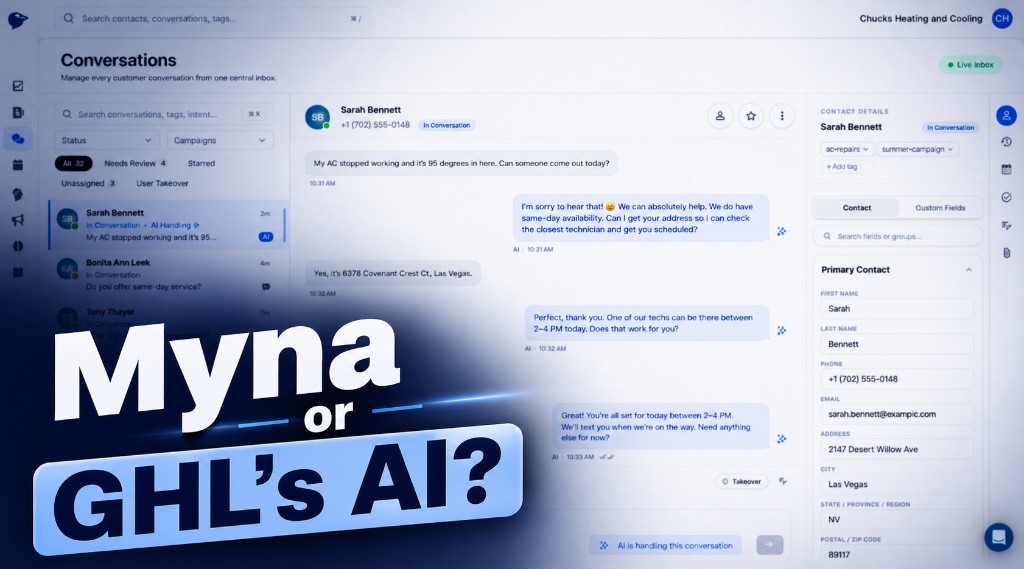
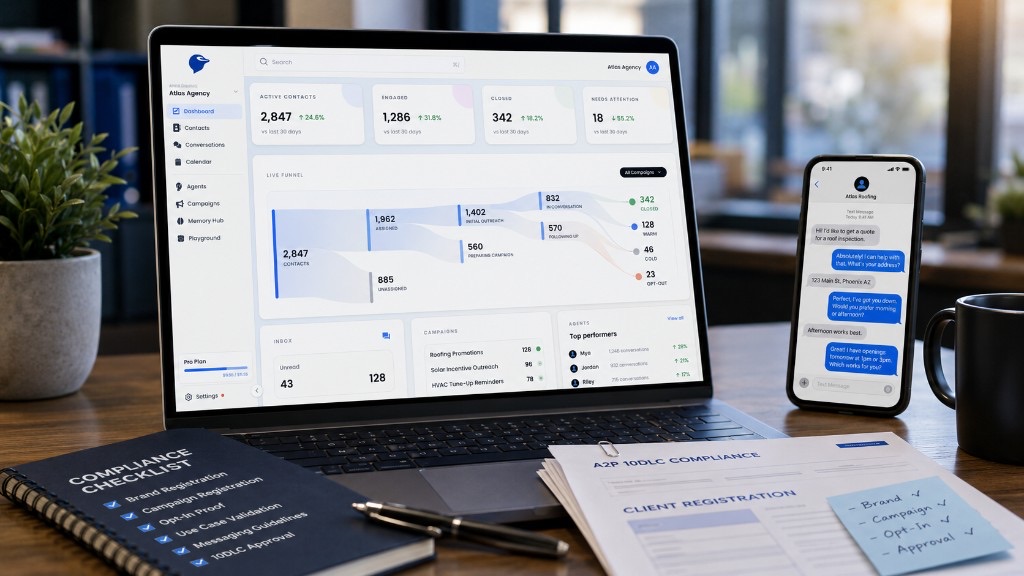
For most clients, this layers on top of what they already run. The leads are already flowing into a CRM, often GoHighLevel. An AI agent sits on top of it, texts every new lead within seconds, qualifies the job, answers the basic questions a homeowner asks at 9 PM, and books the appointment straight into the calendar.
By the time the owner wakes up, the evening’s leads are not a pile of callbacks. They are booked appointments.
If you want the broader math on why this matters, read The Hidden Cost of Slow Lead Response. If you want the HVAC-specific version of this problem, we also covered why HVAC companies lose leads after hours.
What an agency should do this week
Pull one client’s leads and sort them by time of day. Flag everything that came in after 5 PM on weekdays and anything that came in on the weekend. Then check how many of those leads got a response within the hour versus the next morning.
The gap you find is the client’s after-hours leak, and it is almost always bigger than they expect.
That audit is also your pitch. You are not selling the client a vague “responsiveness” upgrade. You are showing them a specific pile of leads they already paid for and never answered fast enough, then offering to close the window that is leaking them.
For the agency, that means stickier clients, a better-looking pipeline, and a new line item built around a problem the client already has.
The leads are already coming in after 5 PM. The only question is whether anyone is there to answer them.
Related reading
- The Hidden Cost of Slow Lead Response
- AI Texting for Plumbing Companies
- AI Appointment Setter vs. Human Appointment Setter
- Best Conversational AI for Small Businesses in 2026
- Why HVAC Companies Lose Leads After Hours
References
- InsideSales.com / MIT Sloan - Lead Response Management Study, Dr. James Oldroyd, 2007
- Harvard Business Review - The Short Life of Online Sales Leads, 2011
- Invoca - How to Turn Missed Sales Calls into Revenue Opportunities
- RapportAgent - After-Hours Lead Study: When Do Homeowners Actually Request Service?
- Pipeline On - 50% of Your Leads Come After Hours