
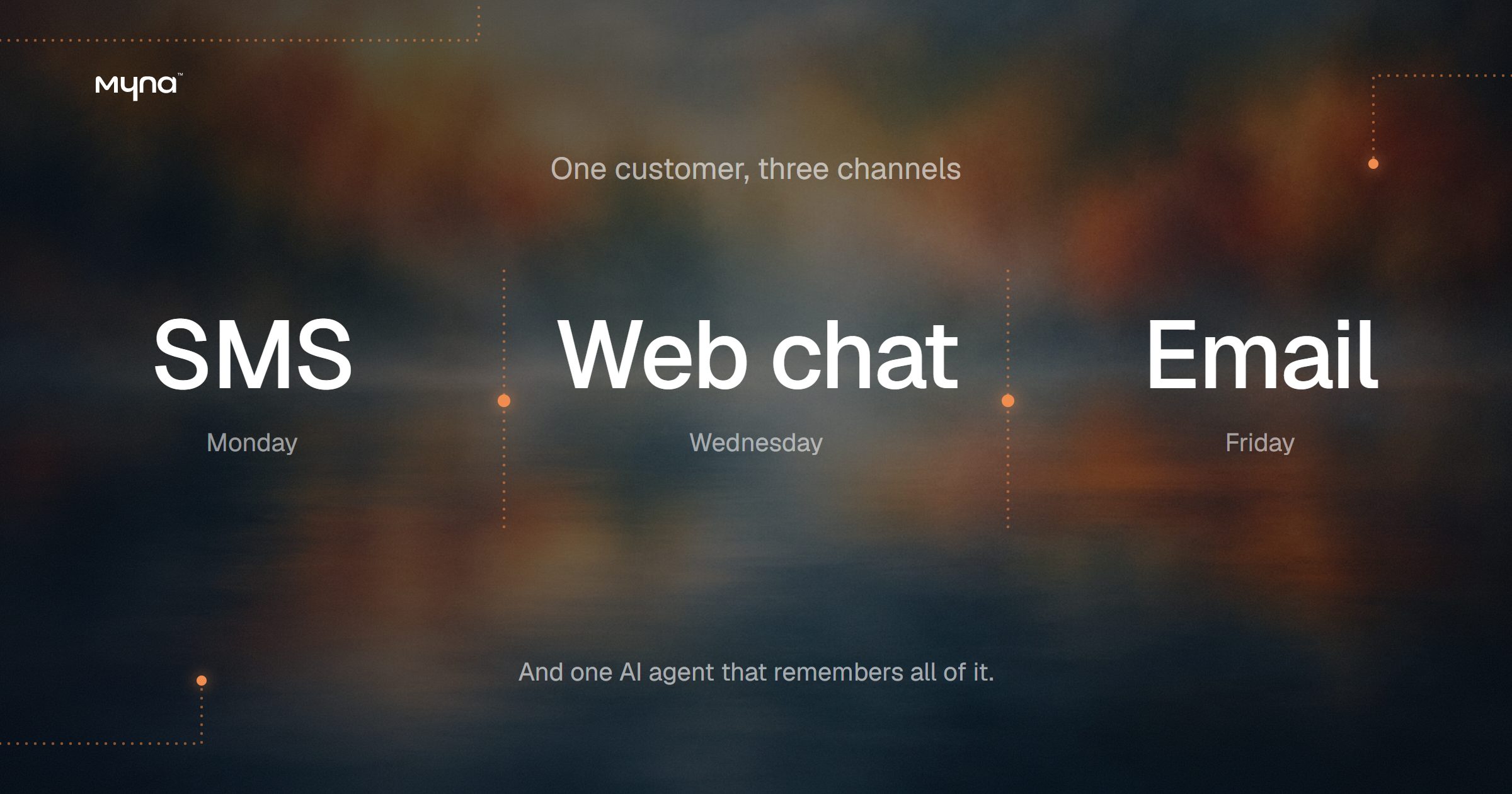
TL;DR: Most businesses are already on several channels, which makes them multichannel. Omnichannel is harder, because it means the customer gets one continuous conversation with one agent, whether they text on Monday, open the website chat on Wednesday or reply to an email on Friday. With agentic AI, that comes down to three things the agent must keep the same everywhere: who the customer is, what has already happened, and the rules and voice the agent follows. What the agent changes from channel to channel is the format, and almost nothing else.
Every day, something like three-quarters of a million people pass through Grand Central Terminal in New York. They arrive by subway, by commuter train, on foot from the street and up from the dining concourse, and for a brief moment they all share the same enormous room, where the clock above the information booth tells every one of them the same time. Nobody arriving from the Lexington Avenue line is given a different timetable from somebody walking in off 42nd Street, because the station works as one building with many entrances.

That is roughly the idea behind omnichannel customer experience, and it’s an idea that most businesses have struggled to put into practice. A customer might text about a booking, open the website chat to ask a follow-up question, and reply to a confirmation email with a change of plan, and in many companies each of those messages lands in a different tool, gets answered by a different bot or a different person, and starts from nothing, as though three strangers had written in.
Agentic AI makes this both more important and more achievable. More important, because an agent that can book, cancel and update records on one channel will cause real confusion if its counterpart on another channel doesn’t know what it did. More achievable, because a single agent can now sit behind every channel at once, with one memory and one set of rules, in a way that was never practical with separate scripted bots.
How multichannel differs from omnichannel
The two words are often used as if they meant the same thing, but they describe quite different arrangements. A multichannel business is reachable in several places, often with a separate tool behind each of them, whereas an omnichannel business connects those places so that the customer’s history, details and conversation travel with them from one to the next.
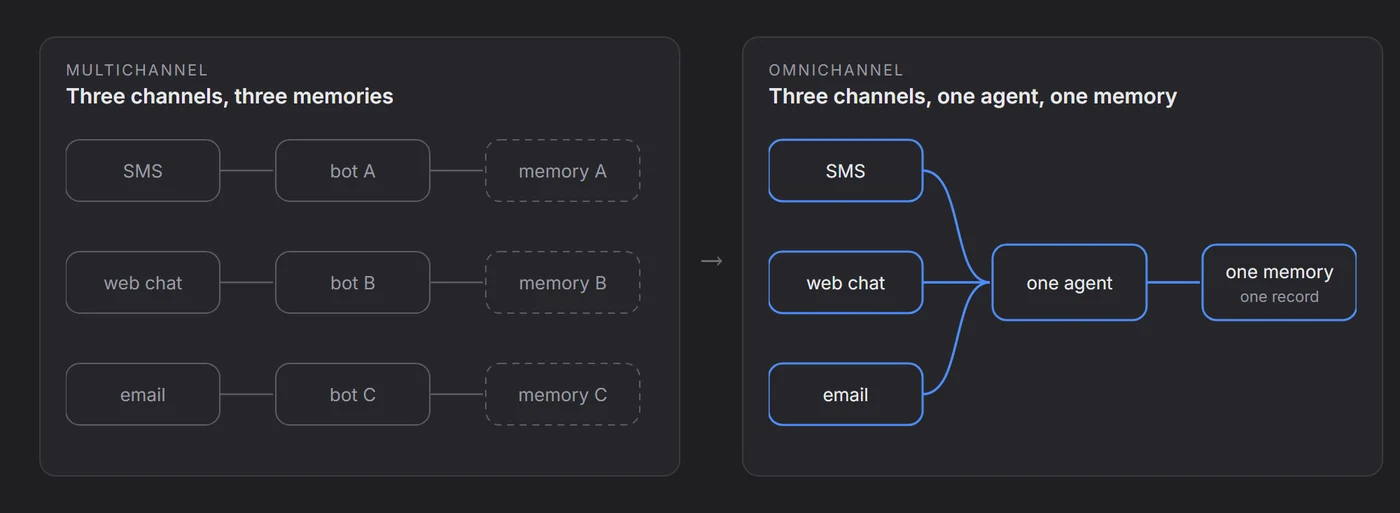
The difference shows up in small moments that customers notice immediately. Being asked for your name and email for the third time in a week, being offered a time you already declined, or being told by the website chat that it can’t see the booking you made by text are all symptoms of a multichannel setup pretending to be something more. None of them is dramatic on its own, but together they tell the customer that the business doesn’t really know who they are.
The reward for getting it right appears to be real. When researchers followed 46,000 shoppers at a large US retailer for Harvard Business Review, they found that customers who used several of its channels spent more on each visit and came back more often than those who stuck to one, which suggests that people who are allowed to move freely between channels tend to stay.
What an omnichannel agent keeps the same
When a single agent serves every channel, there are three things it needs to hold constant, and each of them is harder than it sounds.
Who the customer is: a text arrives from a phone number, a web chat from a browser session, and an email from an address, so the agent first has to work out that all three belong to the same person. This means matching phone numbers and email addresses to a single contact record, merging duplicates carefully, and attaching every new message to the right customer before the agent reads it.
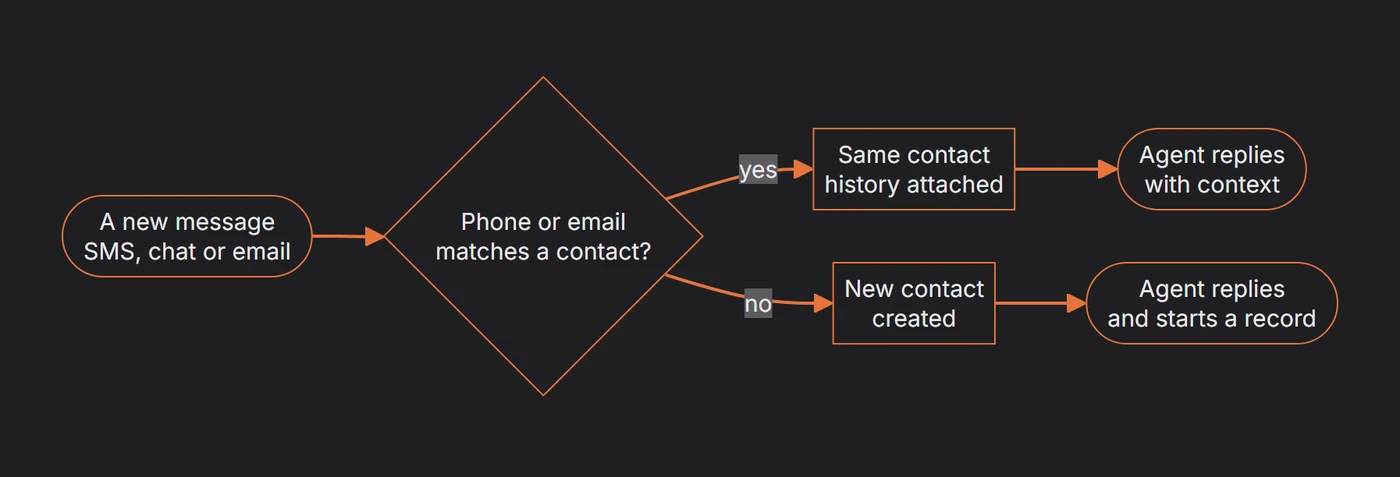
What has already happened: once the agent knows who it’s talking to, it needs the relevant history, such as the appointment booked on Monday, the question asked on Wednesday and the preference mentioned in passing. That history shouldn’t arrive as a raw transcript of every message on every channel, which would be long and expensive and would bury the important parts, but as a short summary, a few saved details and the recent messages, assembled fresh for each reply.
The rules and the voice: an agent that offers a discount on web chat and refuses the same discount by text is worse than one that refuses it everywhere, because inconsistency looks like unfairness. The same instructions, the same knowledge, the same booking rules and the same persona should apply wherever the customer happens to be.
A useful test: book something with an agent by text, then open the website chat and ask about it. If the agent on the chat can’t see the booking, the business is multichannel, however many channels it lists.
What an omnichannel agent changes
Keeping the agent consistent doesn’t mean making every channel identical. Each channel has its own conventions, and an agent that ignores them sounds strange, a little like someone answering a text message with a formal letter.
| SMS | Web chat | Social and WhatsApp | ||
|---|---|---|---|---|
| Length | Short, one idea per message | Short to medium | Longer, structured answers are fine | Short |
| Formatting | Plain text, no markdown | Light formatting, links | Paragraphs, lists, a sign-off | Plain text, emoji common |
| Who usually starts | Either side, with consent | The customer | Either side | Usually the customer |
| Special rules | Opt-out words, sending hours, carrier registration | Visitors are often anonymous at first | Threads and subject lines | Platform messaging windows and policies |
The agent’s persona stays the same across all of these, so a warm, slightly informal voice remains warm and slightly informal everywhere, but the shape of each reply adapts. A long answer might be split into two or three texts on SMS, formatted as a short list on web chat, and written as a proper paragraph in an email, all carrying the same facts in the same voice.
Some rules belong to a channel and should never leak into the others. An opt-out by text, for example, has legal weight for text messaging, and a well-built agent stops texting that customer immediately. Whether it should also stop replying when the same customer opens the website chat and asks a question is a different matter, since they have come to the business themselves, and the honest answer depends on the business’s own policy, which is exactly why it should be decided deliberately and written into the rules.
The handoff problem
Omnichannel customer experience is most often tested at the moment a conversation moves from the agent to a person, because that is where context tends to get lost. A customer who explained their problem to the agent by text and is then called by a member of staff who asks them to explain it all again has just experienced the multichannel version of a handoff, whatever the business calls it.
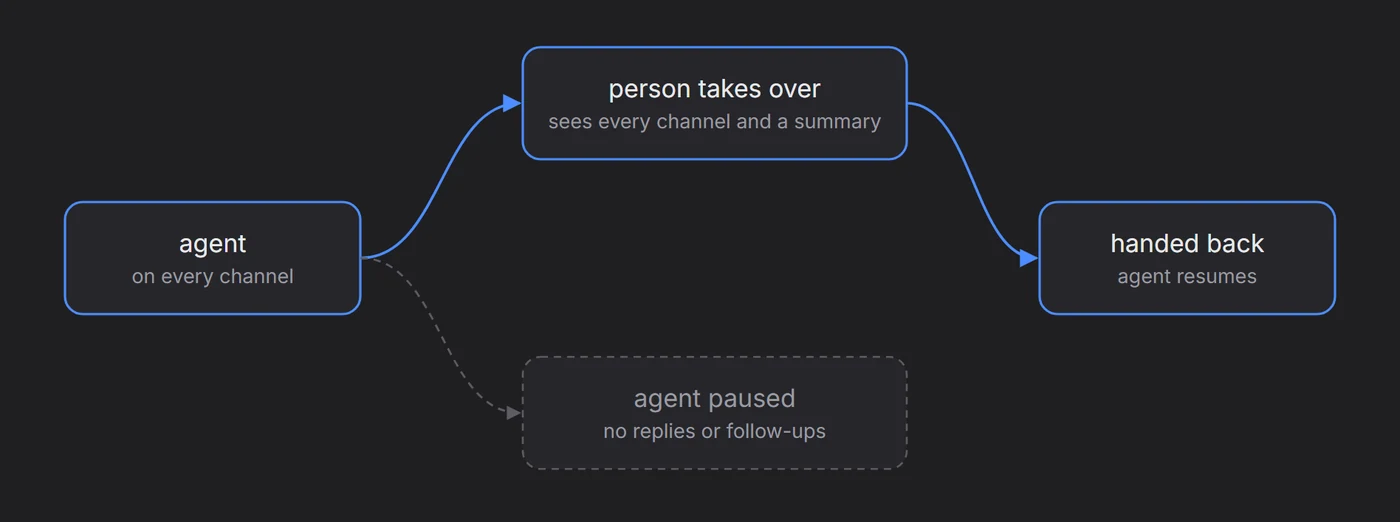
An agentic handoff carries the context with it. The person taking over sees the conversation from every channel, a summary of what the customer wants, the details the agent has already collected, and what it has already done, such as a booking it made or a question it couldn’t answer. While the person is handling the conversation, the agent stays quiet on every channel, including any follow-up messages it had scheduled, and only resumes when it’s handed back.
Why agentic AI makes omnichannel achievable
For most of the past decade, omnichannel was something large companies talked about and few managed, mainly because every channel came with its own system. The phone team used one platform, the chat widget came from a second vendor, the SMS tool from a third, and each had its own bot with its own scripted flows, so keeping them consistent meant keeping several separate sets of rules in step by hand.
A single agent behind every channel removes most of that duplication. There is one set of instructions to maintain, one knowledge base to keep up to date, one persona, and one record of every conversation, and adding a new channel becomes a matter of connecting it to the same agent instead of building another bot. The channels still differ in their rules and formats, and those differences still need care, but the agent itself, the part that understands the customer and acts on their behalf, only has to be built once.
In Myna: an agent can work on SMS and web chat at the same time, or on a channel connected through HighLevel, such as WhatsApp, email, Instagram, Facebook or Google Business. Every message from every channel appears on the contact’s record in one conversation, the persona adapts length and formatting to the channel, and opt-out words apply to text messages.
One building with many entrances
Grand Central works because every entrance leads into the same building, with the same clock, the same departure board and the same staff who can answer a question whichever door you came through. Omnichannel customer experience asks the same of a business, and agentic AI is the first technology that makes it practical for a company of almost any size, since the agent behind the entrances only has to be built, taught and governed once.
The channels will keep multiplying, as they always have, and customers will keep moving between them without giving it a moment’s thought. The businesses they come back to will be the ones where it never matters which door they used.